Keep the page behind the search result
What charities can do to keep the original service information easy to find.
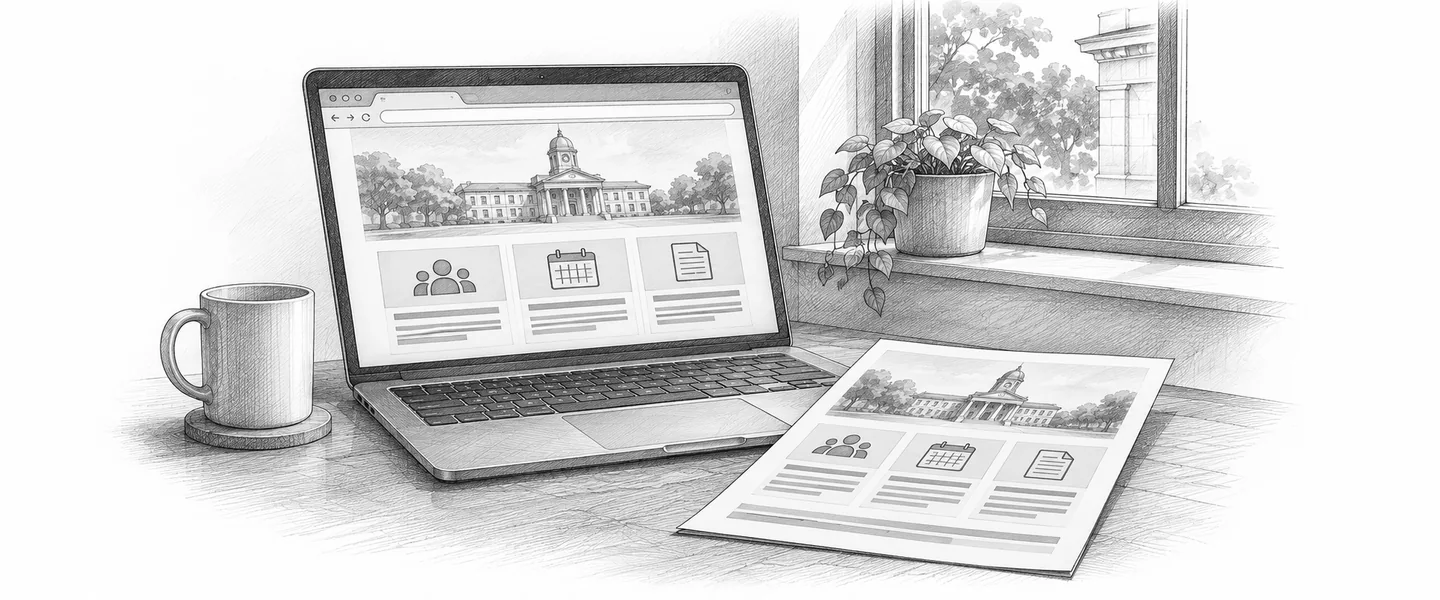
Imagine a volunteer digitising a local newspaper finds a notice about a tenants' meeting. The scan is readable when enlarged, but the search text puts the street name in the middle of an advert from the next column. The archive can now return a result for that street. Anyone who copies the result into their own research could end up with a rather specific piece of nonsense.
On 1 April 2026, the United Nations Development Programme presented Lorya in Belgrade. Developed with the Mathematical Institute of the Serbian Academy of Sciences and Arts and the National Library of Serbia, it converts digitised written material into machine-readable text. The project described documents with mixed scripts, handwriting or unusual layouts among the material it was designed to help process. One intended use was providing text for AI models in underrepresented languages. UNDP Serbia's account of the Lorya presentation
If you inherit a charity's archive, the useful question is what someone can check once the text leaves the digitisation tool. A result that points back to a page can be challenged and corrected. Even the staff who generated the text may struggle to place an export that drops its references.
A passage needs an address
Give a page a reference that will survive a storage move. The old filename might tell staff which box a scan came out of, while a public citation needs an issue, a date and a page number if the archive has them. Someone arriving from a search engine should be able to see the passage or work out where it sits on the page. A button that opens the entire year's scanned issues leaves them to do the indexing again.
Keep the scan available to people authorised to view it, and make the relationship between image and text explicit in the catalogue. A volunteer can inspect a difficult reading with the picture beside it. A researcher can read the paragraph after the one the search surfaced. Search text can be made easier to use without silently rewriting the evidence under it.
Sometimes the page itself is a poor unit. Imagine a tenants' newsletter where an article starts under one heading and ends on a different page beneath instructions for a jumble sale. If the archive publishes search snippets, make sure that the first result can lead into the second part of the article. Ask a tester to find the meeting address from the result, and then to identify who called the meeting. A system that finds the right words may still leave the reader unable to recover the basic facts.
Choose pages that can expose mistakes
A small sample is worth drawing from the boxes staff expect to be difficult. Take the margin notes, the page folded through the middle of a sentence and a sheet set in two scripts. Ask somebody familiar with the collection to mark where each passage starts and put the resulting text alongside the original. An overall estimate of characters recognised could look respectable while whole columns run together and names become unfindable.
Decide what the archive needs from the text. A first pass for discovery can tolerate errors that would be serious in a transcript read out in an exhibition. A list of names used by family researchers may need closer review of people and places than a general search index. Record what staff checked and what they intend readers to do when they find a discrepancy. That gives a future team something to compare against when the extraction engine changes.
Save a handful of representative pages and expected readings for a rerun. Ask for the reading order and the reference to the source as well as the extracted words. If a new version improves recognition on clean documents and makes an old leaflet harder to find, the team can look at the leaflet and decide whether to change the extraction settings, correct it by hand or publish the new version with that limitation visible.
Make a correction travel as far as the mistake
Suppose a reader spots that the name of a community organiser has been indexed incorrectly. Staff need somewhere to enter the correction, mark who checked it and rebuild the search result. Otherwise the archive's page can be right while its search continues to return the wrong name. Follow the correction through a download too, especially if the archive distributes text in batches that another service can copy.
Keep the original extraction where it helps staff review machine errors, with the corrected reading clearly identified. If a second person disputes the correction, someone should be able to bring up the scan and the reasoning without having to hunt through messages. For uncertain handwriting, a status that tells readers the line is unresolved can be more useful than choosing the most plausible word and letting it appear settled.
If the archive has someone for two hours a week, let them handle reports about names and places in material people actually use, then sample the rest. Give them permission to publish a correction and a way to undo one. A volunteer who can flag an error but needs a developer to fix it is doing only half the job.
Check who receives a correction when the collection is indexed elsewhere. If a council catalogue imports the archive once each quarter, the volunteer correcting a name should be able to tell a reader why the old spelling still appears there and when it will be replaced. For an extract sent once to a researcher, a revised version with a short change note may be all that the archive can provide. Agree what the team can promise before it accepts the next batch of material.
Decide what can leave the catalogue
At the Belgrade presentation, UNDP described an open-source licence and registration as a Digital Public Good as future plans for the tool. Those plans concern the software. A charity using an extraction tool has separate decisions to make about its scans and the text it produces. UNDP's description of Lorya's planned release
Check which pages the archive can let visitors read, which can be redistributed in bulk and which need permission to publish. Put permissions with the collection records and check what the export actually includes. A text-only bundle that strips out references and restrictions gives its recipient little basis for distinguishing a public pamphlet from a letter deposited with conditions. If the archive supplies a corpus, let recipients know the version and where they can look for corrections.
Before a batch goes out, search for the street in the hypothetical tenants' notice. Can a reader see which words came from the advert, open the newspaper page and report the error to someone who can fix it? Ask the volunteer to fix the reading during their next shift and see whether the corrected search result links to the same page.