A new steward should be able to restore the archive
What the next steward needs to recover a community archive and keep it usable.
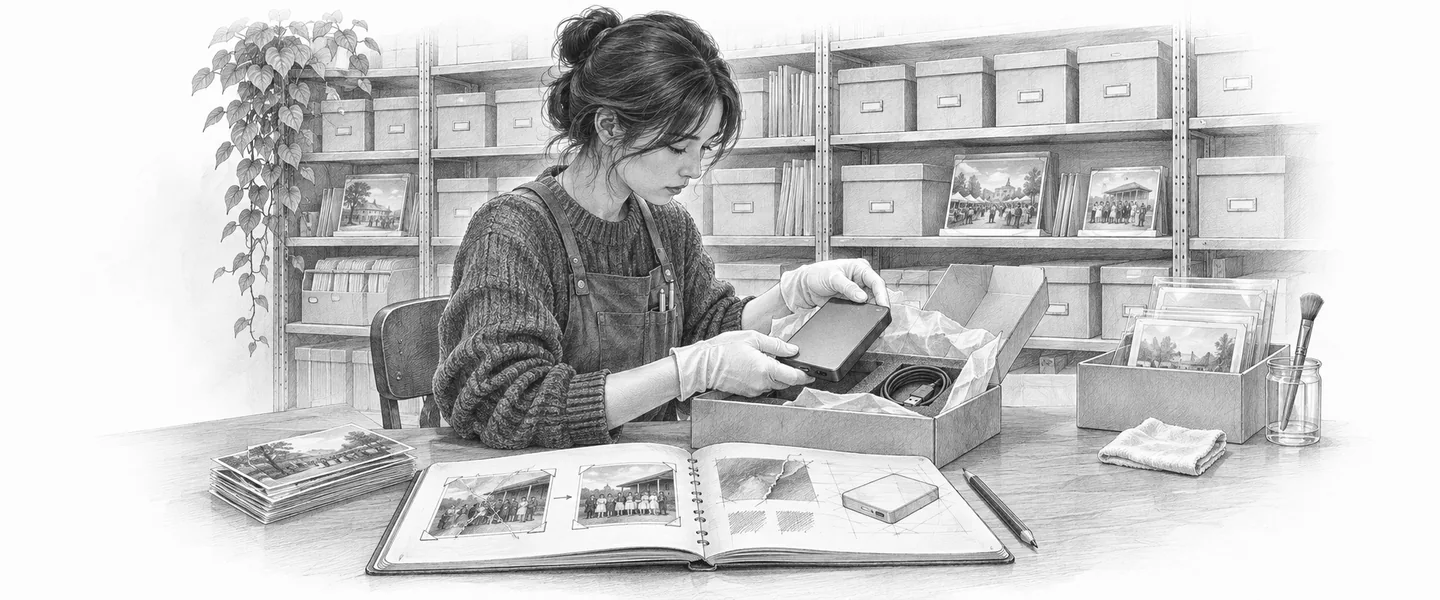
Imagine inheriting a community archive with a hard drive in the office, a public catalogue and a password stored in the departing volunteer's browser. You can find a recording of a residents' meeting in the catalogue, but the drive has a file called “meeting-final2.wav” and no indication of which version people agreed could go online. You can hear the voices. The decision about who else can hear them is missing from the copy.
On 10 June, Brazil's Cariniana digital preservation network convened a discussion called Vestígios do Futuro on artificial intelligence, archives and digital preservation. In its account of the event, the public institute that hosts the network describes a discussion of technological dependence and how Brazil can retain control of its digital memory. For a neighbourhood archive, dependence can come down to the one account that controls access and the one person who can work out which files carry restrictions. Event account from the Brazilian Institute of Information in Science and Technology
Preserve the information that goes with the file
In the residents' meeting example, perhaps there's an original recording and a shorter version cleared for listening. Give the catalogue entry a stable reference and record which files belong to it, which is the master, and which copy can be made available. Where an agreement sets conditions, retain it securely with a reference from the record and an intelligible instruction for the person operating the catalogue. They need to know who to ask if someone wants to use the material in a different way.
Give the next volunteer an inventory they can open independently of the catalogue. For each item, include the reference, filenames or paths, and whatever dates the team can substantiate. Put the source of the description alongside it when there's room for doubt. A move from one catalogue to another should preserve the difference between a donor's handwritten guess and a date confirmed by the organisation that made the recording. If a field's meaning has only ever been explained verbally, spell it out before exporting the whole catalogue.
Decide how to treat records whose access instructions are missing. Keep them out of the public copy while someone's checking them and give the archive steward a list they can work through. An empty field can also mean the archive hasn't entered the decision yet, so make the display behaviour explicit and put the date of any temporary restriction into the internal record. This makes it possible for the next steward to revisit it when the relevant people are available.
Restore something you can check without the usual account
Choose a small sample for a recovery exercise. It could include the meeting, an ordinary photograph and a record whose contents are restricted. Recover them into a private workspace using the backup and the access the next steward will actually have. Ask that person to open the files, match them to the right descriptions and identify which version can go in the public catalogue. If you have checksums recorded at intake, compare them to the restored files. A match verifies the bytes against that earlier record. You still have to open the recording and check that it belongs to the description.
Walk through access to the catalogue account, storage and backups at the same time. If a personal email address receives the reset link, make an organisation-controlled address responsible for account recovery, then ask the incoming steward to use it in an agreed test. Record who can approve access if the two people who usually look after the collection are both unavailable. That matters for a volunteer operation whose next staff change may come with very little notice.
Keep a copy the archive can reach independently of the account that holds its working files. Keep it protected and be clear about who has custody. Work out how you would replace it if a disk fails in storage and how you would know that the latest batch of items had reached it. The person checking needs the date of the last successful backup and an idea of which work is newer.
Include a file that depends on something else in the recovery test. In a hypothetical oral history collection, a volunteer might have put together a listening page that plays a clip and displays a transcript at the right point in the audio. The page can be rebuilt if the archive has the playable file, the transcript and the timing information in forms a different reader can open. Saving a PDF of the page gives a future steward some evidence of how it looked, but they still need the timings if they're going to reproduce the way someone used it.
For anything the team can't open after recovery, write down what would make it usable. Maybe the recording software is available on another machine the archive controls, or a specialist can convert a file without it leaving the archive's custody. If there's an export the team can create while it still has the working system, try a single item now and check what survives. Keep the original where the archive's policy calls for it.
Check what happens after you put it back
Run one more test with an item whose catalogue description was corrected after deposit. If the backup is old enough to bring the earlier description back, the steward should be able to find the newer decision and reinstate it. A similar check is needed for restricted material. In a hypothetical collection, a photo might be visible in an early copy that precedes an agreement to take it down. Keep a protected record of access changes and replay the current decisions before making the recovered catalogue public.
At the end of the test, have someone outside the migration open the public copy. Give them a clue a contributor would know (say, the name of the street where the meeting took place) and see whether they can find the public item. Keep internal notes and restricted files out of that search. Check the old page address too if people have cited it in a local history. If a route has to change, the visitor should still be able to reach an explanation or the surviving catalogue entry from the old address where you control it.
Use the short recording from the residents' meeting to make the last decision in the exercise. The incoming steward should be able to put the cleared version back at the old address and locate the agreement that authorised it. If they're still waiting for the former volunteer to tell them which file to publish, put the recording aside and write down what the archive needs to recover before it can make that decision.